
La Vergne Previous Residents Sources
Use the period in question to choose the first record. The modern parcel card ties a current location to a parcel number and legal description. Deeds then connect recorded owners through a conveyance trail. Directories and census schedules can add the household layer, while tax, newspaper, probate, and cemetery materials can explain an older name after the address trail becomes less direct. A blank online result does not establish that nobody lived there. Rutherford County keeps records in different offices and does not publish one stated online cutoff for all deed material.
| Source | Years It Covers | Where Held | What It Shows |
|---|---|---|---|
| Property card | Current tax year; portal history depth not stated | Rutherford WebPro, TPAD, or assessor counter | Assessed owner, mailing and situs addresses, parcel, sales, exemptions, and legal description |
| Rutherford deeds and indexes | 1804–1840 index noted on TSLA list; 1853–1862 missing-book bridge; current cutoff not stated | Register, title-search route, TSLA, and FamilySearch | Grantor, grantee, recording reference, plats, and legal description |
| County tax records | 1877–2012 | Rutherford County Archives | Taxpayer, parcel, tax status, and address clues |
| Polk directories | 1994, 1996, 1998–2001, 2003, and 2005 | Nashville Public Library catalog; local shelf or HRC to verify | Published name, address, telephone, and business context in an irregular run |
| Daily News Journal | 1931–1992 | Rutherford County Archives | Obituaries, notices, announcements, and civic references |
| Federal census | 1790–1950 under the 72-year release rule | Census and library genealogy services | Household, age, relationship, and enumeration geography |
For a recent transfer, begin with the property card and deed reference. For a mid-century family question, newspapers and the census may supply the better bridge. The verified Polk years are intermittent, not a continuous La Vergne directory run, so a missing volume cannot prove an absence.
Save a La Vergne Parcel
Before moving backward, capture the modern identifiers in one working note: physical or situs address, parcel ID, recorded owner, owner mailing address, legal description, subdivision or lot, deed book and page, and sale reference. The Rutherford County Property Assessor WebPro search accepts owner name, street name, or map-and-parcel searches. It requires three or more characters and gives the name example in last-name-first order without a comma. Its record card and historical-data controls can preserve the fields needed for the next step.
Rutherford WebPro presents the current property-search surface used to begin a La Vergne previous-residents trail.
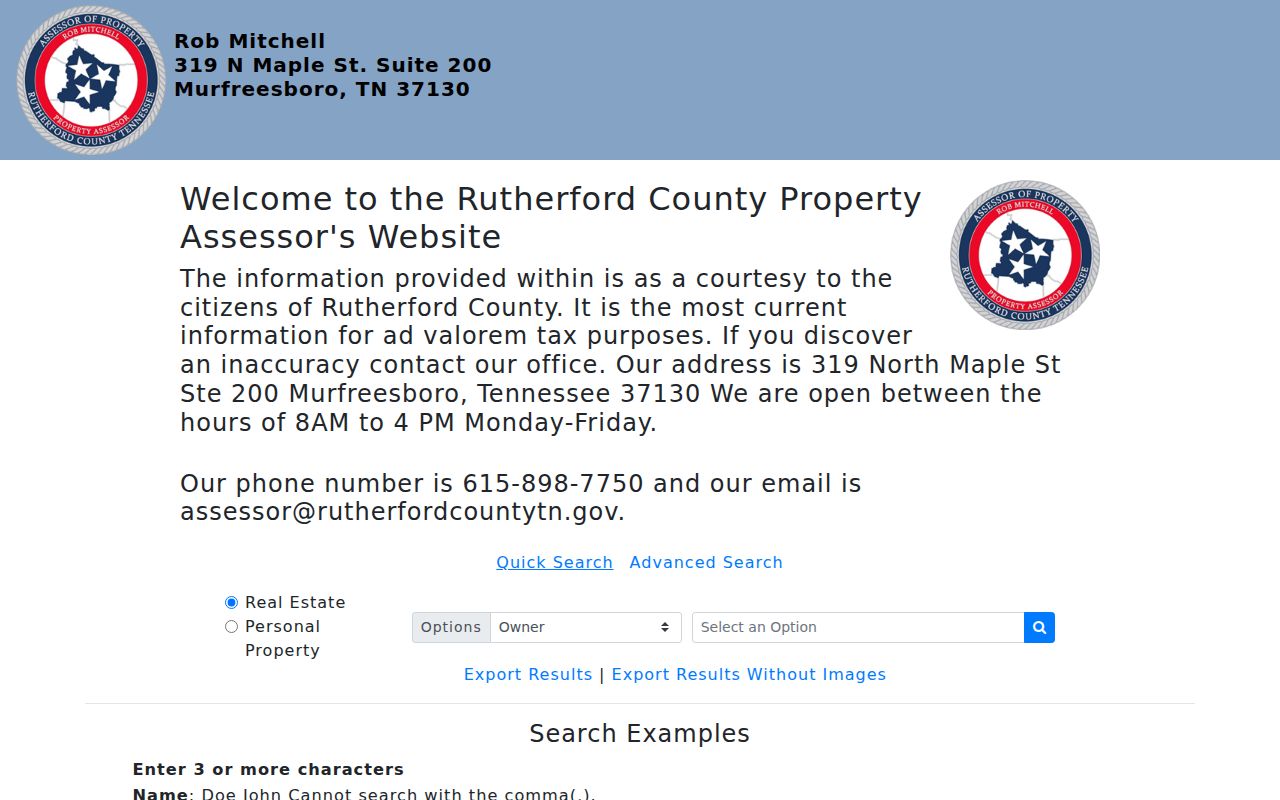
The screen is a starting point, not a household list. A card may show a recorded owner and a mailing address that is a post office box, trust, financial institution, relative, or an out-of-county address. A homestead exemption may support an owner-occupancy claim, but it does not identify every person who lived at the property.
Use the Tennessee Property Assessment Data search when an owner, property address, subdivision, classification, sale date, or parcel component is the stronger lead. TPAD results can be sorted by owner, property address, parcel ID, subdivision, classification, or sale date. Keep the mailing, situs, and legal-description fields separate. Those are different facts, even when the page displays them together.
Note: Save a search date with each parcel card because assessment and map information can change after a transfer or correction.
Trace La Vergne Previous Residents
A deed trail identifies ownership, not every past resident. It still supplies the durable link between a current parcel and an earlier owner. Rutherford County’s Register of Deeds directs users to a title-search route using TVA Map Box Y or Z, book year, and page information. The county does not represent that route as a full name or address search, does not state a single online cutoff year, and advises using a title professional for a complete title search. Treat the online index as an access channel, then use the counter, microfilm, or archive route when the trail predates what is available there.
The Register’s title-search instructions show the Book and Page workflow that connects a saved deed reference to the next record.
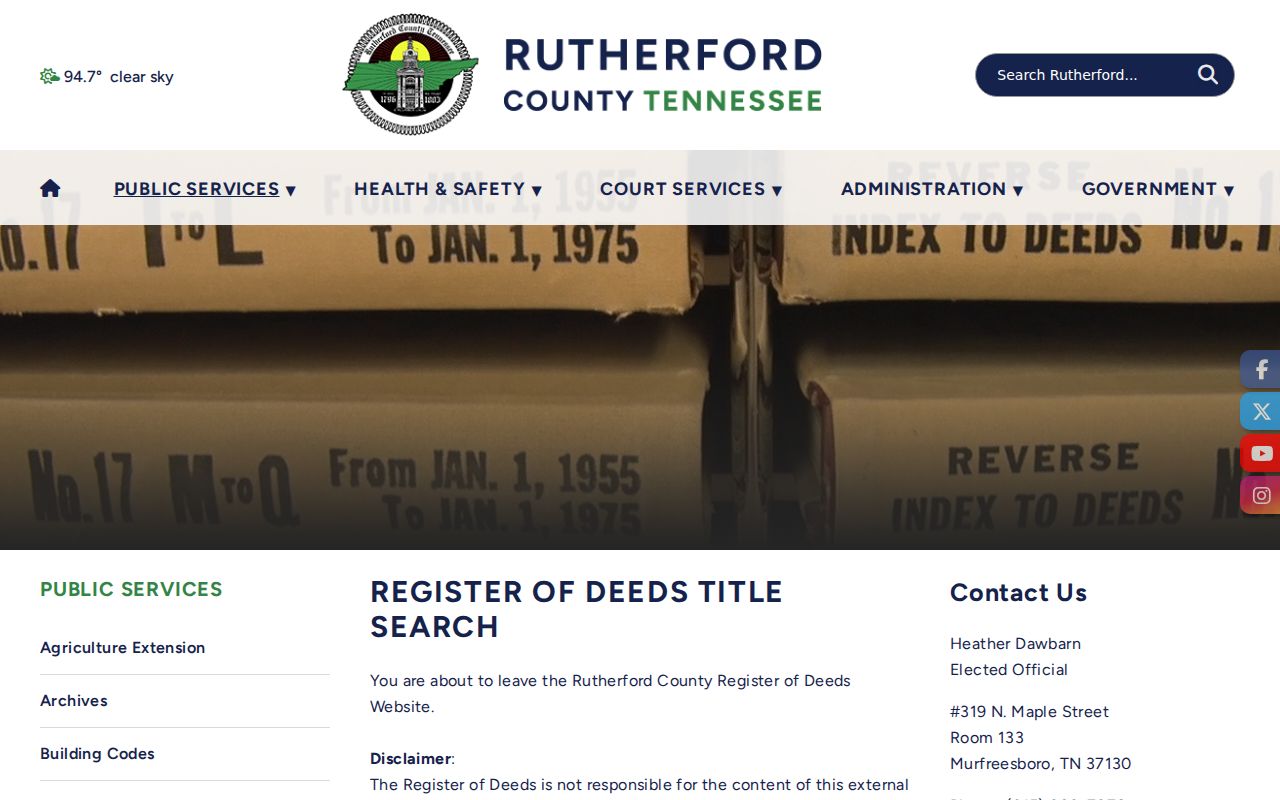
Use the page and the recorded instrument together. A modern street string can fail when a tract was split, merged, or described by lot, block, metes and bounds, or an older road name.
- Open the property card and copy the current owner, parcel ID, legal description, subdivision or plat reference, and deed book and page.
- Use the Register’s title-search route or counter to obtain the conveyance. Record its grantor, grantee, recording date, instrument type, and complete legal description.
- Search the seller from that conveyance as an earlier grantee. Match the lot, tract, plat, or legal description before accepting it as the same property.
- Repeat the buyer-to-seller link, preserving book and page references. If a name spelling shifts, retain each version rather than replacing it.
- When the available index ends, ask the Register, Tennessee State Library and Archives, or FamilySearch catalog for the relevant book or microfilm. Do not infer a transfer from a missing online result.
- Grantor
- The person or entity transferring an interest in a recorded document, often the seller in a conveyance.
- Grantee
- The person or entity receiving that interest, often the buyer. In the next backward step, that earlier seller may be the grantee on a prior deed.
- Chain of title
- A sequence of recorded conveyances linking one ownership interest to another. It is not proof of every person who occupied the address.
- Legal description
- The lot, block, tract, metes-and-bounds, or plat wording that identifies land more reliably than a modern street label.
- Criss-cross directory
- A directory arrangement that may sort entries by address or telephone as well as by name. A local reverse section must be verified in the specific volume before relying on it.
- Enumeration district
- The census area assigned to an enumerator. It helps place a household geographically, but it is not the same as a modern parcel boundary.
Rutherford’s Missing Deed Books
Rutherford’s deed history has a known interruption. Deed books from February 1, 1853 through November 20, 1862 were lost during the Civil War. A Register’s notebook allowed an index to the missing books, and the research record says that index was completed on May 9, 2013 and was available in the Register’s office. An anticipated online upload was not confirmed. A jump over those years therefore signals a records gap or reconstructed index, not proof that the land did not change hands.
The TSLA Rutherford County microfilm list also notes a deed index for 1804–1840 and older material with six deeds missing. Check the exact book, year, and any image-access restriction before relying on a microfilm reference. Plats, adjoining owners, probate, tax records, and the 1878 county landowner map can bridge a pre-modern address where the direct deed line breaks.
La Vergne Past Residents in Directories
Recorded ownership and household presence answer different questions. The verified Polk catalog entries are for 1994, 1996, 1998, 1999, 2000, 2001, 2003, and 2005. Later titles cover Murfreesboro, Smyrna, La Vergne, and Rutherford County together. No official catalog search established a continuous La Vergne series or a local reverse-directory shelf, so treat each volume as a dated snapshot. The Nashville Public Library catalog results are the verified lead for those volumes.
For broader directory mechanics and access choices, use the La Vergne city directories collection route. An alphabetical entry can lead to a name and address, while an address or telephone arrangement may help with a location. Publication was irregular, and a missing year should remain an uncertainty rather than a conclusion about a former household.
- Record the address exactly as printed in a dated directory and preserve initials, abbreviations, and spelling variants.
- Check nearby verified volumes instead of assuming that every year was published or held locally.
- Pair the closest directory period with the relevant released census schedule, then compare the street wording and household clues with the parcel’s legal description.
- Use an obituary, probate file, or deed only to test a relationship or transfer that the dated directory suggests.
Federal population schedules are public through 1950 under the 72-year rule. The 1960 schedule is not public until 2032 under that rule. Census records are arranged by enumeration geography, not as a perfect modern address index, so they work best after a directory, map, or land description supplies the location bridge.
Archives for La Vergne Residents
Rutherford County Archives gives older address research a different set of dates: tax records from 1877–2012, Daily News Journal bound volumes and microfilm from 1931–1992, historic probate and court holdings from 1804–1914, Chancery material from 1845–2004, and Circuit material from 1845–1995. These holdings can place a name, parcel, estate, or local event into a period that a property card does not reach. They are especially useful when a deed identifies an owner but not the surrounding family history.
Rutherford County Historical Research Center is the local-history room within the County Archives and offers books, microfilm, periodicals, scanners, Ancestry Library Edition, Newspapers.com, and FamilySearch Affiliate access.
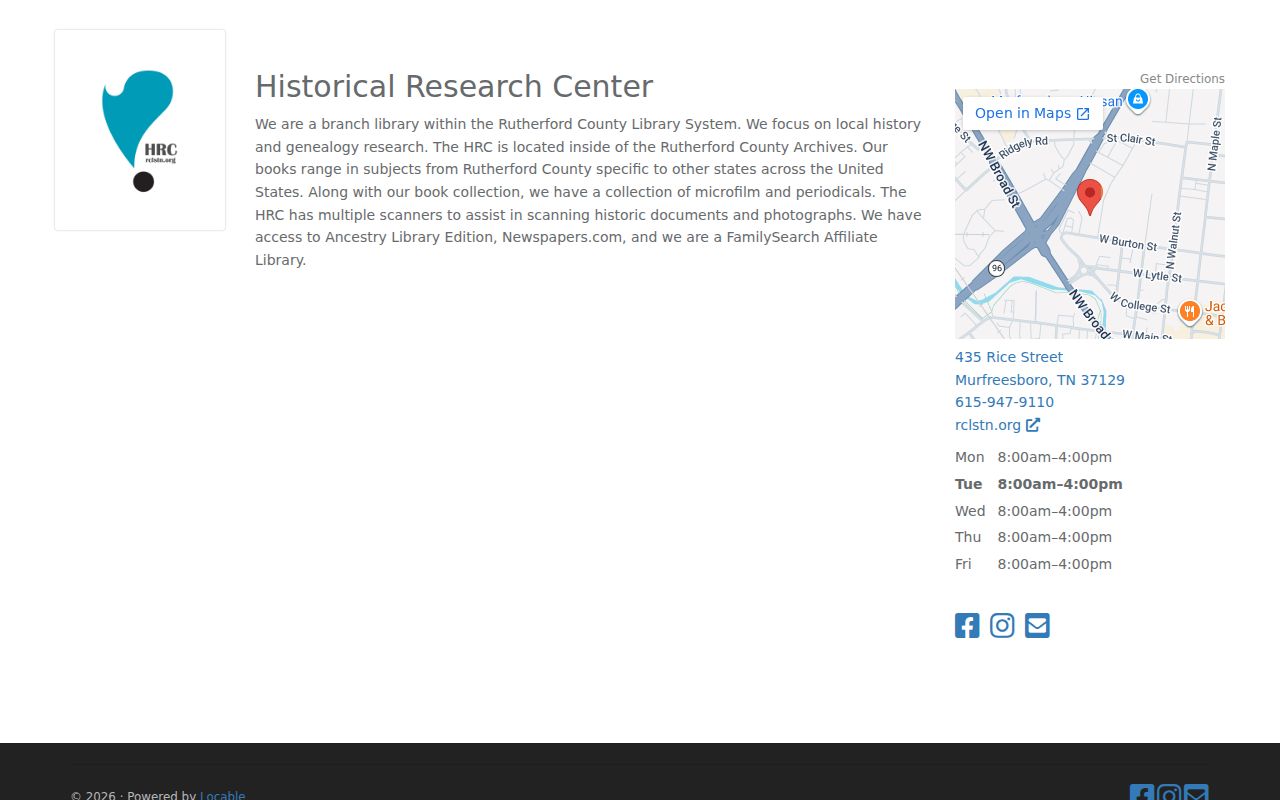
The center is at 435 Rice Street in Murfreesboro and lists weekday hours of 8 a.m. to 4 p.m. A request can identify the parcel, older town-name variant, surname spellings, and date range. No city-issued property-history guide was located, so the useful route is a targeted search across the archive’s deeds, tax, maps, newspapers, directories, cemetery materials, and probate sources.
Daily News Journal notices can identify a spouse, children, a former address, or a civic event. Historic probate material may test a link to heirs or a legal representative. The local cemetery compilation has 51 references and a 2008–09 book, which can provide a family-and-place endpoint when the address no longer appears in a current form.
La Vergne Names in Old Records
Search terms must change with the time period. La Vergne records can use the one-word form “LaVergne” before the official two-word form adopted in 1987. Earlier local material can use Buchananville or Mountain View. Current street names were organized by the late-1950s Men’s Club, while older deeds and maps can describe a family tract, road, or adjoining owner instead. Preserve each original form in the notes and run it separately through a newspaper, directory, archive, and deed search.
The 1878 Beers map is county scale, not a modern address map, but it names landowners, roads, tract lines, and businesses. Pair that older geography with a plat, legal description, or current parcel ID rather than declaring a modern street match from the map alone. The city record does not identify a verified citywide street-renumbering year, so no date should be assumed for an address-number change.
Note: A historical place-name match is a research lead, not proof that a modern parcel occupied the same boundaries.
Personal Limits for Previous Residents
Previous-residents research is appropriate for family history, estate or heir questions, property history, reconnecting with a former classmate, and personal curiosity. It is not a reason to build a current household list. Property records normally identify the assessed owner, not every occupant. Voter, utility, delivery, motor-vehicle, sealed-court, and protected-address information have separate access limits. The Tennessee Safe at Home program gives qualifying participants a substitute address and must never be treated as an invitation to reconstruct or publish an actual protected location.
Tennessee Safe at Home information explains that the program does not erase existing records and that the substitute address is not used for property assessment, property-tax collection, or recorded real-property documents. When a record seems wrong, ask the original custodian about correction or redaction procedures instead of repeating an unverified detail.
Lawful use. Use La Vergne past-resident records for personal, family, estate, or property research. Do not use a name, address, or historical record to follow, intimidate, harass, or harm a living person.