
La Vergne Directory Shelves
The strongest verified directory evidence for La Vergne comes from the Nashville Public Library catalog, not from a scanned local page or a confirmed shelf at the city library. Its records identify Polk volumes that combine La Vergne with Smyrna, Murfreesboro, and, in later titles, Rutherford County. That regional scope matters. A person who lived in La Vergne may be listed under a wider-market title, while a blank search can simply reflect an unissued or unlocated year. Start with the confirmed run, then ask the holding library or an interlibrary-loan desk about a usable copy.
| Collection | Years | Where Held | Access |
|---|---|---|---|
| Polk Smyrna-LaVergne directories | 1994, 1996 | Nashville Public Library catalog | Catalog or interlibrary-loan request; local shelf not confirmed |
| Polk Murfreesboro-Smyrna-La Vergne/Rutherford directories | 1998-2001, 2003, 2005 | Nashville Public Library catalog | Catalog or interlibrary-loan request; regional coverage |
| Local-history directory leads | Years not published | La Vergne Public Library and Rutherford HRC | Ask staff about catalogs, microfilm, yearbooks, and telephone books |
| United States directory guides | Generally 1861-1960 at LOC | Library of Congress guide and catalogs | Check Rutherford or Murfreesboro coverage before requesting film |
There is no verified continuous La Vergne run, no confirmed pre-1994 local printed run, and no inspected local reverse section. The catalog years are 1994, 1996, 1998 through 2001, 2003, and 2005. Missing years do not prove a household left town. A volume may not have been published, cataloged, or preserved in the route checked.
Note: Treat every catalog listing as a lead to a volume, not proof that a named person appears inside it.
La Vergne Library Directory Access
La Vergne Public Library is the first local stop for a catalog question or a nearby genealogy source. Its public page lists Ancestry Library Edition and HeritageQuest on library computers, Tennessee Electronic Library resources for eligible users, newspaper subscriptions, copying equipment, and staff help. A library card needs photo identification, an active phone, and proof of current mailing address for library-controlled services. That requirement does not prevent a visitor from asking staff whether a public historical item is available.
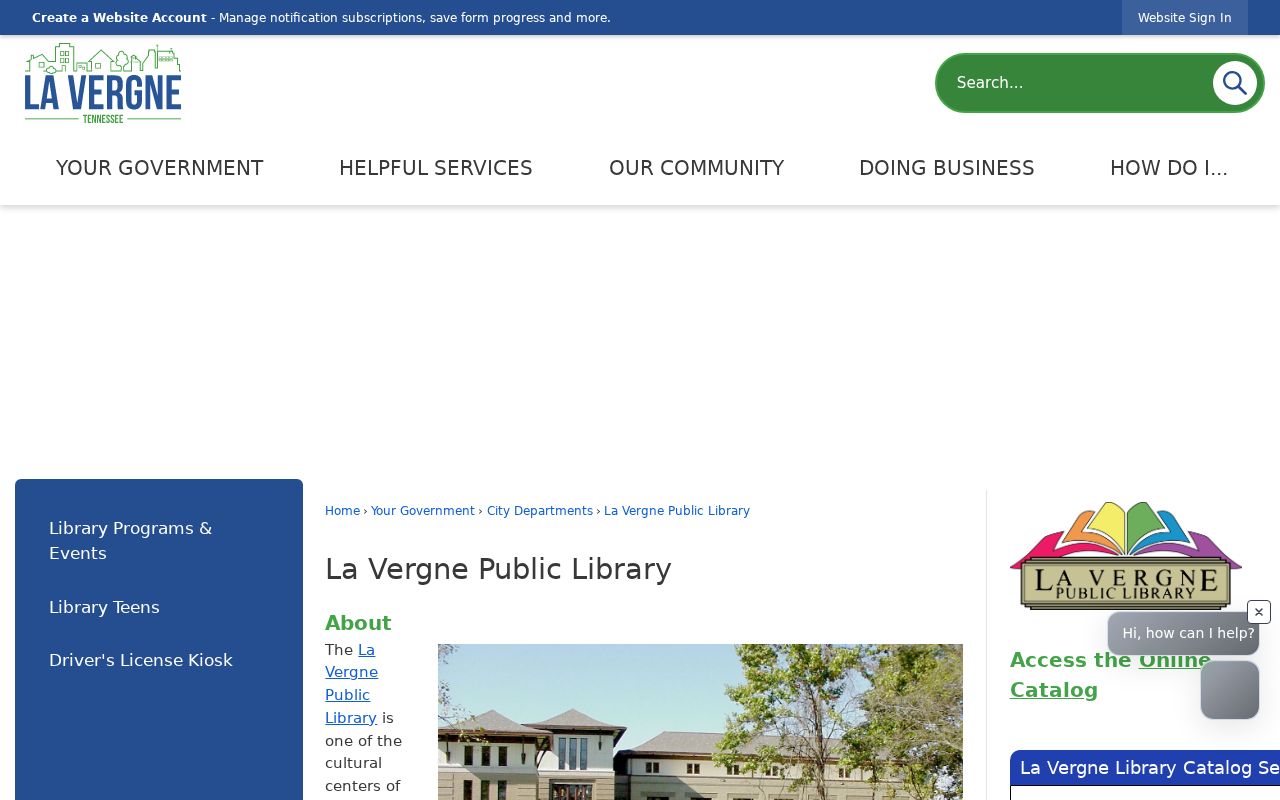
The library screen points researchers toward the catalog and genealogy tools rather than claiming a complete directory shelf. Monday, Tuesday, and Thursday hours extend to 7 p.m.; Wednesday, Friday, and Saturday close at 5 p.m., and Sunday is closed. Because a 2025 outage temporarily changed computer availability, confirm current service before relying on an in-library database.
HeritageQuest adds census schedules from 1790 through 1930, family and local histories, PERSI citations, and other historical material. The public census release rule is still 72 years, so 1950 is currently available while 1960 is not public until 2032. Census and directory evidence answer different questions, and neither should be stretched into proof of every person at an address.
La Vergne Archive Directory Desk
The Rutherford County Historical Research Center is inside the County Archives at 435 Rice Street in Murfreesboro. It keeps local-history books, microfilm, periodicals, scanners, Ancestry Library Edition, Newspapers.com, and FamilySearch Affiliate Library access. The center lists weekday hours of 8 a.m. to 4 p.m. and a phone number of 615-947-9110. Those tools make it a practical place to pursue a catalog lead when the La Vergne library does not list a particular book or reel.
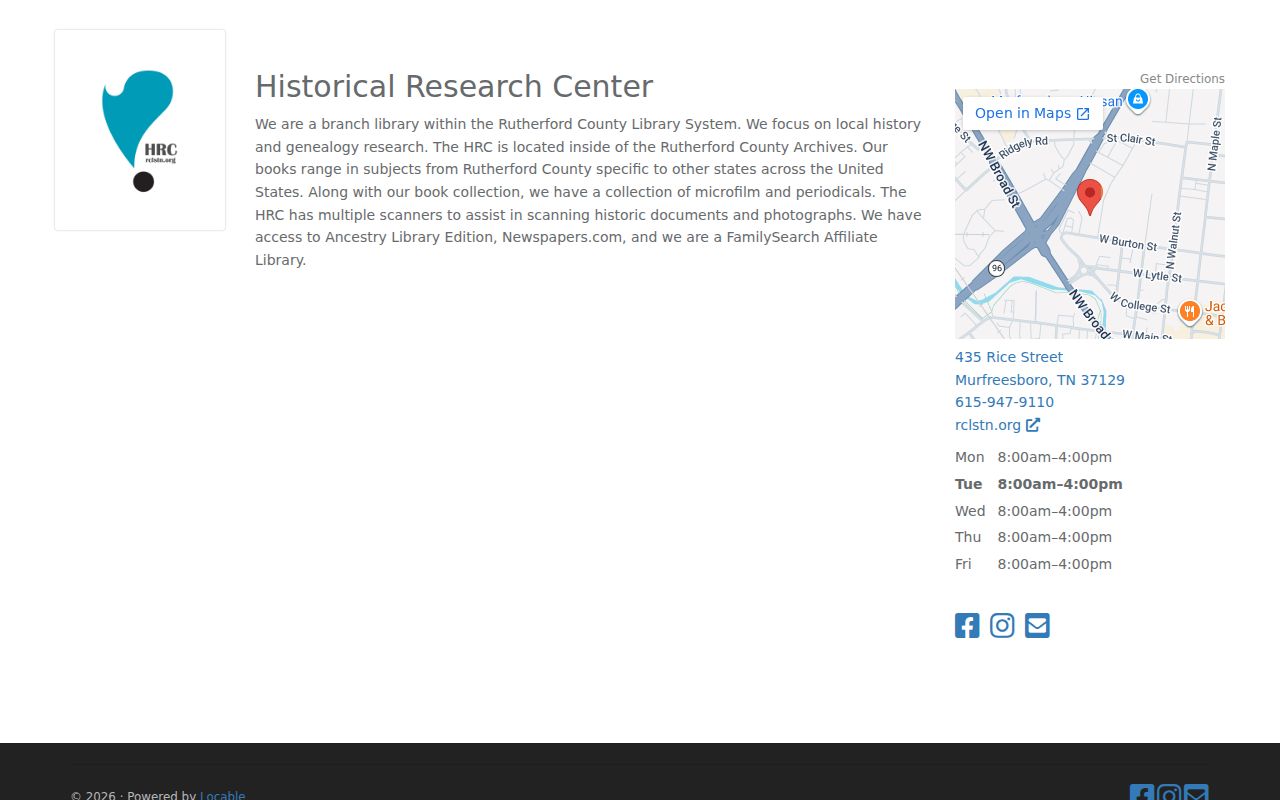
The research-center view supports an on-site search strategy: take the catalog title, surnames, address variants, and a narrow time range instead of assuming one box holds a complete La Vergne series. The adjoining Rutherford County Archives desk is also at 435 Rice Street, lists 615-867-4609, and holds tax records from 1877 to 2012, historic probate and court material, maps, and Daily News Journal microfilm.
Rutherford County Historical Society digital collections add photographs and growing local-history material, along with free death and estate-settlement publications. The society did not publish a dedicated La Vergne directory index in the research reviewed. Its value is surname context and volunteer-guided local history, not a substitute for a dated volume.
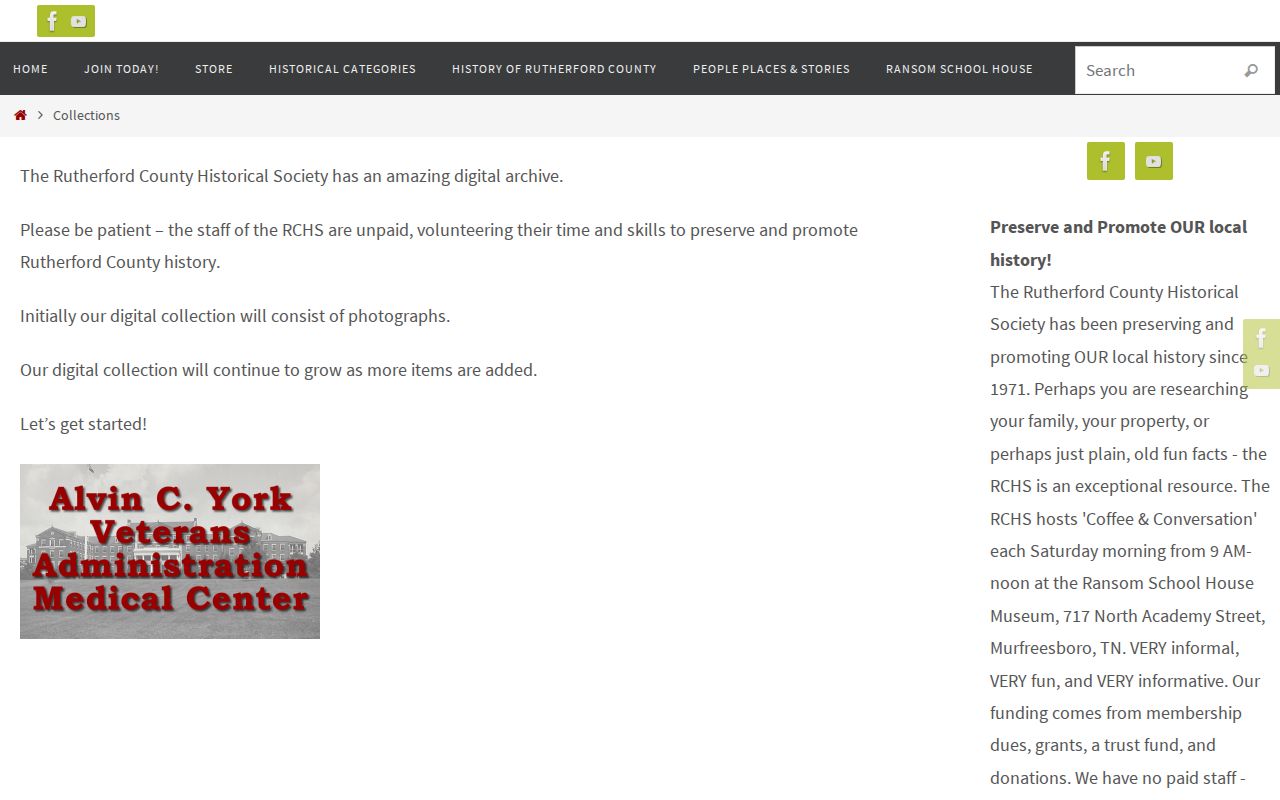
The historical-society collection is most useful after a directory has supplied a surname, a business, or a road name that can be tested against a local photograph or estate publication. Keep the date and source with each note, since an image caption alone may not identify a household.
La Vergne Polk Directory Gaps
Polk and R.L. Polk & Co. appear in the catalog titles, but the titles change as the market grows. The 1994 and 1996 records use Smyrna-LaVergne wording. The records for 1998, 1999, 2000, 2001, 2003, and 2005 use Murfreesboro-Smyrna-La Vergne wording and include Rutherford County. That change is a reminder to search the county seat and neighboring-city terms as well as La Vergne.
- 1994: a Polk Smyrna-LaVergne catalog record is verified.
- 1996: a second Smyrna-LaVergne record is verified.
- 1998-2001: catalog records identify a regional Polk sequence, not a continuous La Vergne-only book.
- 2003 and 2005: later regional Polk records are verified after gaps in the known list.
La Vergne expanded sharply after the early volumes. The city had fewer than 1,000 people through 1959, reached 7,499 in 1990, and had 38,719 residents in the 2020 census. A later regional directory can therefore reflect subdivisions and businesses that an earlier volume never had a reason to cover. Compare like periods, rather than treating different-sized volumes as equal snapshots.
Read La Vergne Directory Entries
No scanned La Vergne or Rutherford directory entry was verified in the research. The inventory below therefore describes general mechanics supported by the Library of Congress guide, not fields proven to appear in every local Polk volume. City directories are often alphabetic by surname and can also have address or telephone arrangements. Read the front matter and its abbreviation key before transcribing a name, especially when the volume uses initials or local shorthand.
| Possible entry feature | How to treat it |
|---|---|
| Name | Capture the spelling, initials, suffix, and placement exactly; it may be an alphabetical listing. |
| Spouse or household clue | A spouse may appear in a personal listing, but that field is not verified for the local run. |
| Occupation or institution | Directories can include professional, business, civic, or religious information; test it against the volume’s key. |
| Address or telephone arrangement | Record the address as printed, then compare it with the period’s map or current parcel history. |
| Owner, renter, or widow mark | Do not assume a symbol exists locally. Interpret it only after reading the actual volume’s abbreviations. |
- Criss-cross directory
- An address-ordered arrangement that may allow a reader to move from a street to a listing. A local reverse run has not been verified.
- Householder index
- A list organized around the named head of a household or address, depending on the publisher’s plan.
- Abbreviation key
- The volume’s own explanation of its short forms and symbols. Photograph or transcribe it before interpreting a listing.
A directory entry is a dated lead. It can point to an address, work context, or household clue, but it is not a certified record and does not establish a present residence. When an entry matters to family research, preserve the title, year, page, and arrangement used.
La Vergne Historical Name Variants
Older catalog and archive searches should include LaVergne as one word, plus Buchananville and Mountain View. The early post office was Buchananville in 1837, and the name became LaVergne after Francois Roulhac died in 1852. The city officially changed from one word to two in 1987. A town name can be the difference between a blank catalog result and a useful regional reference.
Street wording needs the same care. The late-1950s Men’s Club selected street names from members who lived near or on them. Earlier deeds and maps may instead use tract, family, or road names. Keep the historic phrase in your notes, then compare it separately against a modern map or parcel description. This is a record-linking step, not proof that two similar place names represent the same address.
Note: Search spelling variants one at a time, then preserve the catalog result that produced each lead.
Trace La Vergne Household Volumes
Use a directory sequence to create a household timeline, not to fill every missing year with a guess. Begin with one confirmed appearance, then work outward to the nearest catalog years. An address change may mean a move, a street-name change, a different person, or a shift in the book’s coverage. Pair each notation with a separate source before deciding which explanation fits.
- Search the surname and its spelling variants in the earliest confirmed volume that fits the family’s time in La Vergne.
- Record the printed name, address, occupation or institution clue, volume title, year, and page.
- Check the next available Polk year, not an assumed annual volume, and note whether the entry, street, or title wording changed.
- Pair the result with the closest released federal census, then use the Rutherford assessor or deed trail only to test a parcel connection.
- Use newspaper, cemetery, probate, or marriage and death indexes to investigate a disappearance without assuming a cause.
For a modern name that needs a separate official cross-check, use the La Vergne resident lookup workflow rather than treating an old directory as current evidence. The two sources serve different dates and different questions.
La Vergne Newspapers and Directory Years
Rutherford County Archives has Daily News Journal bound volumes and microfilm for 1931 through 1992. The Historical Research Center also offers Newspapers.com access. Search the newspaper around a directory appearance for obituaries, marriage announcements, civic notices, and address references. A notice may explain a move or family change that a short directory entry cannot.
Census schedules provide a second time layer. Public federal schedules currently run through 1950 under the 72-year release rule. Pair 1930, 1940, or 1950 household records with the 1931-1992 newspaper run, then with the verified Polk years beginning in 1994. This leaves honest gaps instead of inventing an annual address history.
The 1878 D.G. Beers Rutherford County map is another older bridge because it names landowners, roads, railroads, and tract lines. It is county-scale and is not a modern address map. Use it to form a land question for the Archives, not to assign a present street number.
La Vergne Cemetery Directory Clues
La Vergne has no municipal cemetery, yet the city compiled 51 cemetery references from county records, books, observation, and local knowledge. Cemeteries in La Vergne Past and Present, compiled in 2008-09, is available through the library genealogy room and as a city PDF. It can connect a past resident to a family place when a street trail ends.
A cemetery reference is not a current directory or a complete family list. Use a burial name as a prompt for an archive death index, newspaper notice, probate file, or census household. That careful sequence respects the limits of a compilation while making the local material genuinely useful.